5 Polish History Books on My 2025 Reading List
*As an Amazon Associate, I earn from qualifying purchases. If you decide to purchase any products, it would mean so much to me if you used my links. This gives me a small commission and allows me to continue to provide free content on this blog. Thank you so much for your support!*
If you’ve been meaning to add a few Polish history books to your reading list in 2025, check out some of the titles I’ve listed below, available in English and Polish. These books below make for great gifts for Polish history lovers as well. Or, if you need some other ideas, check out my Ultimate Polish Christmas Gift Guide.
As a historian and life-long reader, I keep a few Polish history books on hand to read throughout the year. Of course, I run into the problem that my reading list grows faster than I can cross titles off it!
When I was little, I would read voraciously. I kept a flashlight under my bed and a book under my pillow and as soon as the lights were out… the flashlight was on! I’m almost certain that years of this habit is what caused me to have the poor eyesight I now have (I’m the only one in my family who is near-sighted). As the years went by, the books got longer and more numerous.
During university, my reading was almost exclusively related to my classes and my undergraduate and graduate theses, and it was only once I became more established was I able to start reading on my terms again. I haven’t always been able to read as much as I did when I younger, but I still challenge myself to read at least 10 books a year. For 2025, that goal is no different.
Here are the Polish history books on my reading list for 2025. Let me know in the comments what you think and if you have any favorites you can recommend. I’m always looking to grow my reading list even longer.

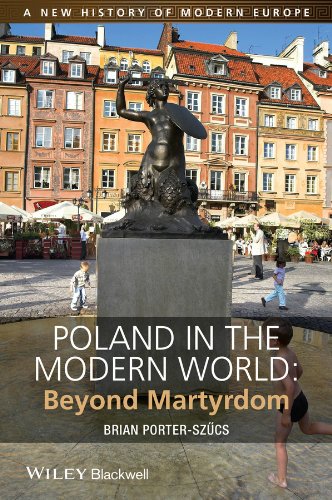
1. Poland and the Modern World: Beyond Martyrdom
by Brian Porter-Szűcs
Ok, I’ll be honest — this is a book that I read a few years ago. It earns a spot on this blog’s list because, although I will not be reading it cover to cover in 2025, I find it to be an excellent resource if you are just beginning your journey into Polish history.
This book covers Poland’s expansive 1000-plus year history in only 400 pages. It gives you a comprehensive overview of the country’s most important historical events and, as such, is an incredible jumping off point to do more reading on what might interest you. Porter-Szűcs gives you just enough detail for you to feel comfortable with the Polish historical timeline as a whole and does so in a fairly objective (no literature will be 100% objective) way. This is straight history – not wrought with emotion and (as the title suggests) the martyr complex that frequently afflicts books written on the topic.
It’s not a perfect book and much is still left out, especially when it comes to minority groups within Poland, but it’s a great start as you consider what topics you would like to explore in more detail.
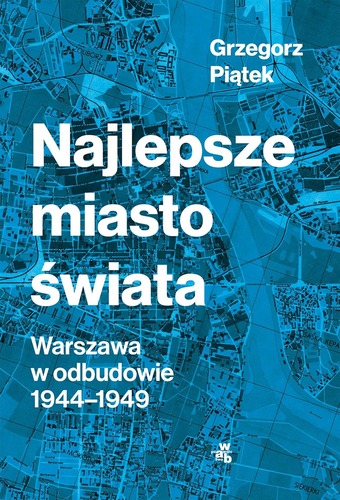
2. Najlepsze miasto świata. Warszawa w odbudowie 1944-1949
by Grzegorz Piątek
I received this book last Christmas when I first moved to Warsaw from Wrocław and I am ashamed to admit that I’m only now getting around to reading it.
This book goes into the capital’s rebuilding following the Second World War. Warsaw was bombed so heavily by the Germans during the war that it was almost completely obliterated. Only about 20% of the city was left after the war. After the war ended, it was up to the Polish people, those who had stayed through the bombings and those who had returned to find their homes completely destroyed, to rebuild their city and their lives.
The Old Town in Warsaw was quickly and faithfully reconstructed due to the numerous paintings and photographs throughout its history. But today, taking into account the restorations after the war, only about 30% of Warsaw looks as it did pre-war. The remaining 70% was constructed to be a utopian new city built out of the ashes of the old. This is the story of that new “Best City in the World” that the title alludes to.
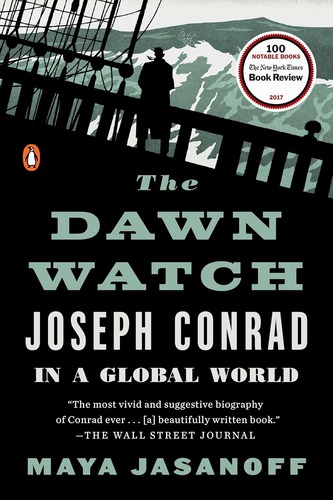
3. The Dawn Watch: Joseph Conrad in a Global World
by Maya Jasanoff
As a student of European history, it was impossible for me to not touch on the subject of colonialism in my studies and how it shaped globalism.
In this book, author Maya Jasanoff explores how Joseph Conrad, a Polish man known for being one of the greatest writers in the English language, was a prophet of globalization. She blends history, biography, and travelogue to follow Conrad’s routes and the stories of his four greatest works.
What most intrigues me is the ability to “see” what Conrad saw, through his eyes as a Polish man during a time of great expansionism and competitive exploration. I’m hoping it will help round out my knowledge of what was happening during the colonial scramble with some first-person observation, and shape my view of Poland’s role in colonialism (which, although not the same as Western colonialism, did exist to some extent).
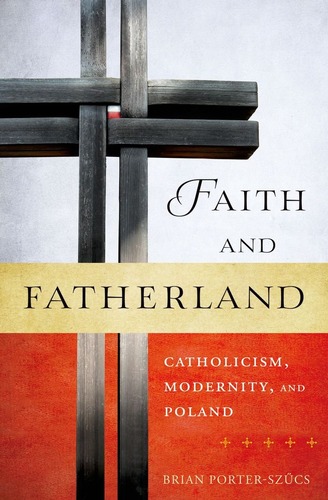
4. Faith and Fatherland: Catholicism, Modernity, and Poland
by Brian Porter-Szűcs
Following up from his book Poland and the Modern World: Beyond Martyrdom which I mentioned above, author Brian Porter-Szűcs dives into the complicated relationship of the Catholic Church and Poland in the modern period, specifically its role in breeding a kind of religious nationalism in the country. He examines how concepts such as sin, the Church, the nation, and the Virgin Mary were used in Poland to critique social injustices and air grievances.
I enjoyed Porter-Szűcs’ writing and how he organized his thoughts when I read Poland in the Modern World, so I am keen to read his arguments and his understanding of the role of the Catholic church in modern Poland. This is an area I admittedly don’t have much experience in although I have my own opinions and arguments; I’m looking forward to learning more.
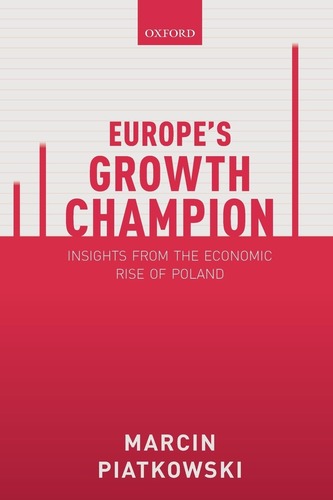
5. Europe's Growth Champion: Insights from the Economic Rise of Poland
by Marcin Piątkowski
A lot has recently been said about the astronomical economic growth that Poland has experienced in the last 40 years. Since the fall of communism, Poland’s GDP has increased tenfold.
This book charts the economic rise and transition of Poland into one of the top performing economies in Europe. Piątkowski explores the lessons learned from this experience, as well as the challenges it has faced. Looking ahead, he also states Poland’s future challenges as it continues to grow.
I am very much looking forward to reading this one. As much as I enjoy history, I also have an interest in politics and economy and how both have played significant roles in Poland’s history.